Documents
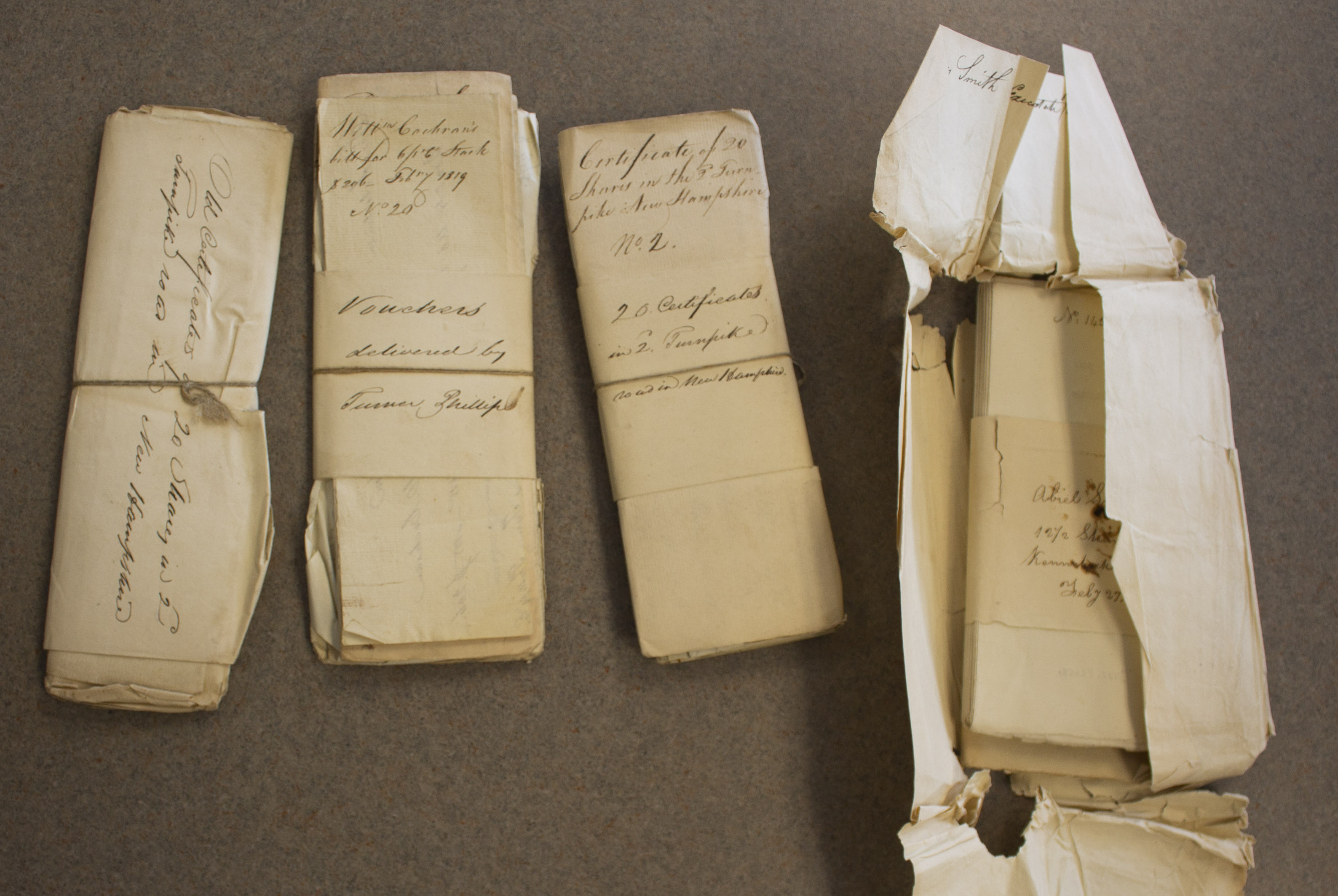
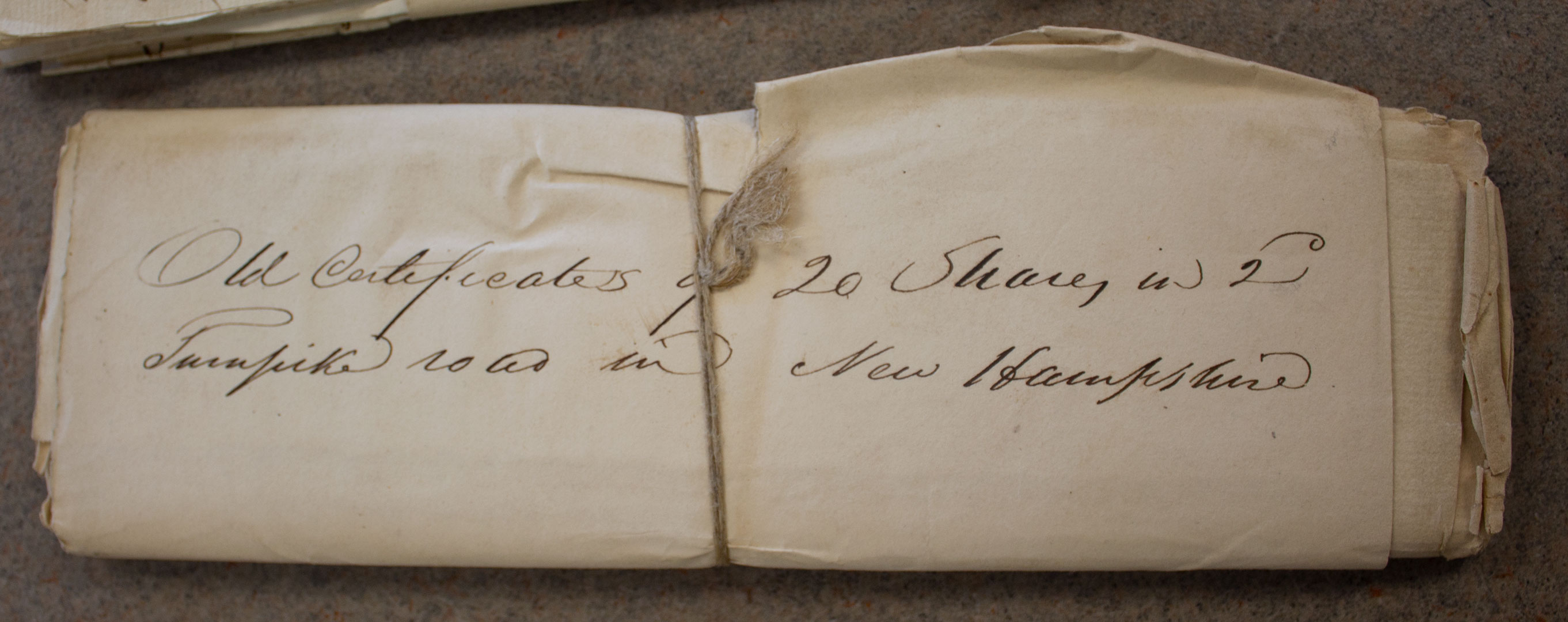
When Abiel Smith died in 1815, he left stocks and bonds in his will expressly for the support of a “school for the instruction of the people of Colour.” Smith had already supported the school in the early 1800s, helping pay teachers’ salaries and other costs. After his death, he instructed the Selectmen of Boston to manage his fund, and they complied. The total estate Smith left included:
- 30 shares in the Newburyport Turnpike
- 20 shares in the Second Turnpike Road in New Hampshire
- 17½ shares in the Kennebeck Bridge
- 5 shares in the Springfield Bridge
- 1 share in the Boston Theatre
- 1 Share in the Bathing house in Boston
- $4000 in 3% United States stock
Rather than selling these assets, the Selectmen held on to these stocks and bonds in an account. At regular intervals, profits of the turnpikes, bridges, and other businesses were paid in dividends to the Smith fund. The United States “stock” paid interest. The regular income paid to rent a schoolhouse in the North End in 1818, repair the basement schoolrooms in the African Meeting House, and purchase books and supplies for the students well into the 1840s.
Questions to Consider
- What types of shares did Abiel Smith leave for the funding of the Abiel Smith School?
- Why were private donations important for the funding of African American schools in Boston? Do these private donations tell us anything of the City of Boston’s priorities in education?

